Curso online: "História, Ambiente e Conhecimento no Antropoceno – edição especial Fogo"


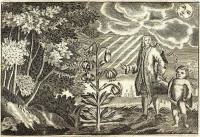
This month - "Portrait of a Flora: José Quer y Martínez and the Botany of Enlightened Spain (1762-1764)", by Pedro Mota Tavares - REPORT(H)A - Portrait of a Flora: José Quer y Martínez and the Botany of Enlightened Spain (1762-1764)
-----------------------------------------------------
Este mês - "Retrato de uma Flora: José Quer y Martínez e a Botânica da Espanha Ilustrada (1762-1764)", por Pedro Mota Tavares - REPORT(H)A - Portrait of a Flora: José Quer y Martínez and the Botany of Enlightened Spain (1762-1764)

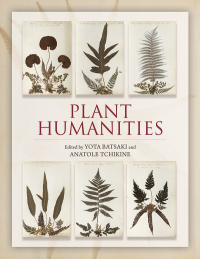
Plant Humanities, edited by Yota Batsaki and Anatole Tchikine, will come out from Dumbarton Oaks/Harvard University Press in August. This first publication of the Plant Humanities Initiative moves plants to the center of critical inquiry, positioning them as biocultural entities with distinct environmental and social histories.
The book’s introduction describes the key methodological and theoretical parameters of the plant humanities framework. This is followed by thirteen commissioned chapters by scholars across disciplines and covering a broad geographical range—from the Americas, Europe, and the Pacific, to the Indian subcontinent, East Asia, and Africa. Many of them explore the dual character of plants as place makers and world travelers. As ecosystem builders and cultural agents constitutive of national, sacred, and domestic ecologies, plants also help us trace legacies of colonialism and capitalism, and the related challenges of anthropogenic climate change and biodiversity loss.
Plant-focused epistemologies are central to Plant Humanities, with several essays exploring the interplay between vernacular and scientific paradigms and distinct taxonomic systems to reveal instances of rupture, continuity, and resilience.
The book concludes with an essay on the poetics of plants, exploring their foundational role in communal imaginaries and our understanding of the sacred. Collectively, the essays elevate plants as vibrant beings that have profoundly shaped our environments and cultures.

We are happy to announce the publication of the latest issue of HoST - Journal of History of Science and Technology
HoST is a peer-reviewed diamond open access journal, published online in English by Paradigm Publishing Services (De Gruyter), and results from a partnership between four Portuguese research units (CIUHCT, CIDEHUS, ICS e IHC).
The full issue is available from this link. Articles can be downloaded separately or as one single compressed folder.

A associação Finis Terrae lança uma convocatória aberta para a exposição Pensar o Parque Natural a realizar em Setembro de 2026, acompanhada da edição de um catálogo coletivo.
Artistas – Podem candidatar-se com trabalhos visuais e interdisciplinares, apresentando obras que reflitam sobre a relação entre Natureza, património e comunidade, com especial enfoque no Parque Natural de Sintra-Cascais e nos desafios partilhados por outros Parques Naturais ou sítios UNESCO.
Autores de texto – Escritores, jornalistas, investigadores e ativistas são convidados a propor ensaios, crónicas, reflexões ou testemunhos que dialoguem com os temas da exposição. Os textos selecionados integrarão o catálogo da mostra.
O objetivo é reunir num mesmo projeto imagens e palavras, criando um espaço de partilha e pensamento crítico sobre a defesa do património natural e cultural.
Mais informações em Pensar o Parque Natural | Convocatória Arte 2026 | Finis Terrae


Call for interest
The Catholic Church and the Environment – CATCH, Funded by the European Union (ERC ADG CATCH, Grant Number 101199683).
The ERC research project CATCH - The Catholic Church and the Environment is hiring 5 PhD students, 2 Postdocs, and 1 research assistant. We are looking for committed researchers, passionate co-workers, and dedicated scholars who wish to join our team and build together our new Radical Environmental Humanities Hub.


V Congreso de la Red Universitaria Española de Historia Ambiental (RUEDHA)
Universidad de La Laguna. 18-20 de noviembre de 2026
Entre el 18 y el 20 de noviembre de 2026, la Red Universitaria Española de Historia Ambiental (RUEDHA) celebrará su V Congreso en la Universidad de La Laguna. Con esta Segunda Circular queremos, en primer lugar, agradecer el apoyo y la ilusión concitadas por el anuncio de los ejes temáticos que vertebrarán el encuentro. Se han recibido más de una quincena de propuestas de mesas-taller temáticas y otros espacios de debate y encuentro, como presentaciones de libros. Este documento anuncia, en segundo lugar, las propuestas de mesas-taller aceptadas que concretarán el congreso. Cada una de ellas aparece con el nombre y filiación institucional de las personas encargadas de su coordinación, así como una dirección e-mail de contacto. Los resúmenes de cada sesión pueden encontrarse en la página web del congreso: https://ruedha2026.hypotheses.org/.

Call for a thematic dossier to be published in 2027
Deadline: 18 April 2026
HoST – Journal of History of Science and Technology, recently indexed by Scopus, is a diamond open access, on-line peer-reviewed international journal devoted to the History of Science and Technology, published in English by a group of Portuguese research institutions and De Gruyter Brill/Paradigm. HoST encourages submissions of original historical research exploring the cultural, social and political dimensions of science, technology, and medicine (STM), both from a local and a global perspective.
Past thematic issues have dealt with topics as diverse as circulation, science communication, natural history, or the relation between science, technology and politics. Future issues might deal with both established and emerging areas of scholarship. The editors of HoST are looking for proposals for a thematic dossier to be published in 2027 (HoST, Volume 21, issue 2–December).
Each thematic dossier should be prepared by the guest editor(s) and include four research papers along with an introduction.
Submission guidelines Proposals should include the following items:
1. An abstract describing the topic for the thematic dossier and its significance (500 words);
2. A list of the contributors along with the titles and abstracts (300 words) of the four research papers;
3. Brief CVs (300 words) of the guest editor(s) and authors;
The guest editor(s) and the contributors must be prepared to meet HoST’s publication schedule:
Abstract and titles submission: 18 April 2026
Submission of complete research papers: 8 January 2027
Publication: December 2027 (Issue 21.2) Proposals will be subject to approval by the Editorial Board and authors will be informed of the outcome by the end of May 2026. Submissions should be sent as an e-mail at tachment (preferably in one single .odt or .docx file), to the Chief Editor: chiefeditor@johost.eu

We invite you to submit abstracts for the upcoming special issue of Svetovi / Words titled “Fragile Environments and Emergent Vulnerabilities in the Age of Capitalocene” (tentative title) (eds. Nežka Struc & Sandi Abram).
In this issue we seek to thematize and explore intersections as well as disentanglement between environmental fragility and vulnerabilities that emerge in the lives of (more-than-)human beings. In the era of Capitalocene (Moore 2017; 2018) when contemporary climate change ebbs and flows across the Earth as heatwaves, droughts, wildfires, severe storms, floods, and air pollution and crises become part of everyday lives (Fassin 2012, Podjed 2024) and constant urgency (Schwell 2023), the once reassuring narrative about the world, as Domínguez Rubio (2025) writes, is all but gone: “ontological security” is giving way to “a sense of ontological fragility, […] a fragility that is felt as the inescapable condition of life on this planet”. One condition shared, albeit unequally, across plural words.
If this horizon of planetary fragilities might index global “capitalogenic flows” (Lawson 2025), where ceaseless accumulation of capital depends on the production of “systemic harm to socio-ecological infrastructure” (Wojnarowski 2025: 3) in particular contexts, then vulnerability names the conditions through which those harms are inscribed in bodies, landscapes and multispecies “lifeworlds” (Ingold 2000) - as feelings, affects and lived experiences. What remains, in many places, are debilitated bodies and damaged environments, where “debility” (Levine 2025, Mohamed 2023, Puar 2017) – injury and exclusion produced by economic and political forces – disrupts the category of disability as not something that is inscribed into lives, but created by violent social arrangements. It describes the ongoing conditions of exposure, and damaged environments in which (more-than-)human beings must continue to live.
Proposed timeline:
- 6 March 2026: deadline for abstracts
- 1 August 2026: manuscript submission deadline
- October 2026: peer reviews
- July 2027: publication
For submission please visit our registration page: https://forms.cloud.microsoft/e/X6k3tWBQR4 .


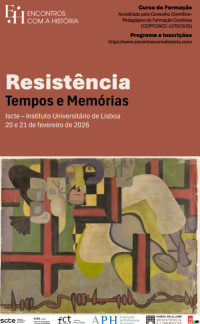
Encontros com a História - Edição 2026 - Resistência: Tempos e memórias (ISCTE, 20 - 21 de Fevereiro 2026)
Programa disponível em: https://www.encontroscomahistoria.com/programa-1-1-1

Coordenadores: Frederico Ágoas (CICS.NOVA - NOVA FCSH) e Miguel Carmo (IHC – NOVA FCSH / IN2PAST)
Mais informações em:

Prepared by Sandra Mesquita, Valério Pillar, and Wolfgang Willner
This Special Issue, dedicated to the history of vegetation science, consists of two parts that are published simultaneously in the Journal of Vegetation Science (JVS, IF = 2.7) and in Vegetation Classification and Survey (VCS, IF = 3.0). Manuscripts on topics related to the development of vegetation typologies and vegetation surveys and underlying methods will be considered for publication in VCS, while those focused on the history of hypothesis-driven approaches, numerical methods, etc., will be directed to JVS.
More information at:
Twin Special Issue "History of Vegetation Science" - call for abstracts - vegsciblog.org


Dopo i congressi internazionali di Évora (2024) e di Jaén (2025), la sede di Milano del CNR Istituto di Studi sul Mediterraneo con l’Università degli Studi di Milano hanno accolto l’invito ad organizzare il III Congresso Internazionale Agua y Territorio, che si terrà l'8 e il 9 giugno 2026 a Milano.
PROPOSTE DI COMUNICAZIONE
• Data limite: 30 gennaio 2026.
• Accettazione: 15 febbraio 2026.

CALL FOR PAPERS
Commodities of Empire Annual International Workshop
2-3 September 2026, Spanish National Research Council, Madrid
Locating Knowledge: Science and Technology in Commodity Frontiers
Organisers: ‘Commodities of Empire’ British Academy Research Project, ERC Consolidator Grant WILDHIST, and the AMBTEC project funded by the Spanish State Research Agency.
Deadline for abstract submissions: 14 February 2026.
The scientific and technological dimensions of commodity history have long attracted attention, with recent work offering comprehensive accounts of the transnational movement of experts, technologies, and scientific ideas. Yet the skills, techniques, and expertise required for resource extraction and processing in and around commodity frontiers remain less thoroughly explored. This workshop seeks to redirect attention to these frontiers of commodity production as sites of knowledge generation, codification and exchange from early modern times to the present. While remaining attentive to imperial, trans-imperial and transnational knowledge networks, the primary aim of this workshop is to examine commodity frontiers themselves as key locations for the development of techno-scientific knowledge and practice by both local and transnational actors. We are especially interested in historical research on indigenous technologies and traditional practices of commodity production, many of which held central economic and cultural significance.
The workshop also welcomes works that reflects on the historiographical and epistemological implications of recognizing local protagonists –such as indigenous peoples, colonized populations, and migrants at commodity frontiers– as active contributors to the production and circulation of knowledge. The workshop further examines the role of institutions and associations (cooperatives, workers’ unions, botanic gardens, agricultural stations, etc.) that operated in these regions as generators, intermediaries, translators, and sometimes gatekeepers of knowledge.
The workshop aims to contribute to ongoing efforts to make the history of science and technology less Eurocentric and US-centric by explicitly broadening inquiry into knowledge histories in Africa, Asia, and Latin America, while remaining open to cases from all geographical regions. By placing local knowledge at the center of global commodity history, it frames commodity frontiers as complex technological landscapes and sites of experimentation shaped by plural socio-economic and ecological contexts as well as by unequal power relations. The workshop therefore invites papers that critically engage with these trans-local dynamics and local-global articulations, while also illuminating alternative histories of the making of scientific and technological knowledge.

No mês de dezembro decorreu mais um encontro da Report(H)a, desta vez acolhidos pelo CITCEM.
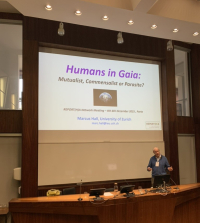
O encontro contou com as comunicações de mais de 30 investigadores e as palestras dos especialistas Marcus Hall (University of Zurich ) e Tim Soens (University of Antwerp).
Agradecemos a todos aqueles que contribuíram para um evento científico de excelência e convidamos a que consultem a publicação do livro de resumos, acessível em:
Partilhamos também a ligação para um filme documental sobre as Serras do Porto, local da visita de campo, onde fomos muito bem acolhidos por Manuel Miranda Fernandes:
https://www.
................................................................................................................................
In December, another Report(H)a meeting took place, this time hosted by CITCEM.
The meeting featured presentations by more than 30 researchers and lectures by experts Marcus Hall (University of Zurich) and Tim Soens (University of Antwerp).
We would like to thank everyone who contributed to this excellent scientific event and invite you to consult the publication of the book of abstracts, available at:
We also share the link to a documentary film about the Serras do Porto, the location of the field trip, where we were warmly welcomed by Manuel Miranda Fernandes:
https://www.

Chaque année, l’association des jeunes chercheureuses inscrites en Master et en Doctorat au CESCM, au Criham et à l’HeRMA de l’Université de Poitiers (JANUA) organise une journée d’étude. Cette journée interdisciplinaire, ayant vocation à valoriser les travaux de jeunes chercheur·euses (étudiant·es de Master 2, doctorant·es et post-doctorant·es ayant soutenu leur thèse depuis moins de trois ans), portera en 2026 sur la thématique des Animaux dans les sociétés et les arts de l’Antiquité à nos jours.
Les journées auront lieu les jeudi 16 et vendredi 17 avril 2026.
Université de Poitiers, UFR SHA (campus centre-ville) [précisions ultérieures]
Semi-présentiel. Les communications pourront être assurées à distance, de même que le suivi de la journée d’études.
Toute question devra être adressée au courriel de l’association : association.janua@gmail.com
More information Janua – Association des étudiant·es de Master et de Doctorat des laboratoires HeRMA, CESCM et Criham de l'Université de Poitiers

The newest issue of Springs: The Rachel Carson Center Review is now live! It opens with a dive into the world of comics, before embarking on a fieldtrip across an Arctic research station, Finland’s boreal forests, and the eroding riverbanks of Bangladesh. Three essays, a visual narrative, a short story, and an interview join forces to uncover missing pieces in our quest to understand human–environment interactions.